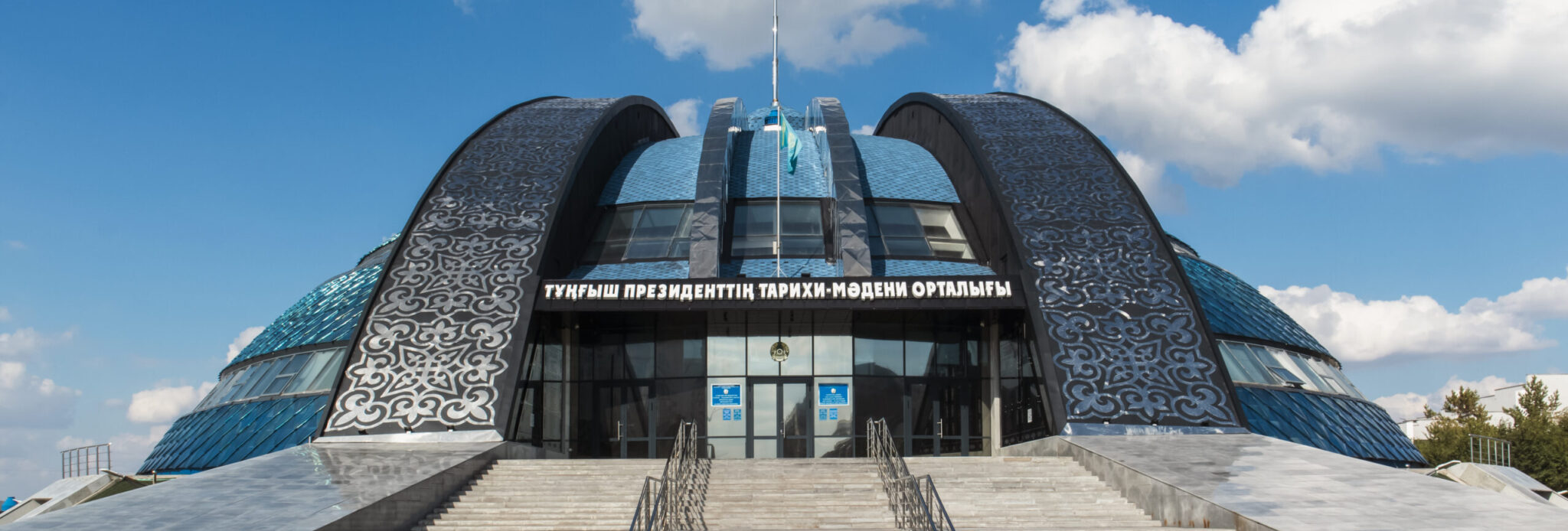
Name: MSOPE Historical and Cultural center of the First President
Foundation year: 2011
Form of incorporation: Municipal State-Owned Public Enterprise
Director of the museum: Sargizova Saida Zhamantaevna (been in office since 2015)
Legal address: Karagandy region, the city of Temirtau, Republic Avenue 40
phone numbers: 8 (7213) 91-43-94, 91-43-60
e-mail:
Building area: 4560 square kms.
Are functioning: 6 exhibition halls, opened in 2011 and two exhibition halls created by employees in 2020 and 2022, an art gallery, a film lecture hall for 120 seats, conference hall for 70 seats (red and blue halls), a museum depository have been operating ever since.
The center carries out its cultural and educational activities on the basis of: the Charter of the municipal state-owned enterprise “Historical and Cultural Center of the First President” of the Department of Culture, Archives and Documentation of the Karaganda Region, approved on October 31, 2013 by order No. 286 of the state institution “Department of State Assets and Procurement of the Karaganda Region.
Opened on November 22, 2011, in Temirtau, the Historical and Cultural Center stands as a leading research and museum complex in the region. Its concept transcends the boundaries of a traditional museum: it is a modern platform demonstrating the unbreakable link between the formation of Independent Kazakhstan and the development of the "Kazakhstan Magnitka" (the Karaganda Metallurgical Combine).
Core Areas of Operation
- Archival Research: The Center investigates documents related to the history of the industrial region and the construction of the nation's largest metallurgical plant. Interactive hall features allow for the visualization of the complex stages of the country's industrial growth.
- Scientific Platforms: The Center serves as a prestigious venue for major city, regional, national, and international events, including those hosted by external organizations. It facilitates research-to-practice conferences, roundtables, and forums dedicated to history and industrialization. The Center also hosts open lessons, lectures, and methodological seminars for students and educators, as well as career guidance sessions for school graduates.
- Exhibitions and Collections: The Center meticulously preserves artifacts reflecting the nation’s history and the regional legacy of labor valor.
- Technological Heritage: The halls feature detailed models of metallurgical shops, allowing visitors to trace the complete technological cycle of steel and alloy production.
- Funds: The collection includes gifts from world leaders—highlighting Kazakhstan's international status—unique copies of archival documents, and personal belongings of prominent figures, honored metallurgists, and athletes.
- Multimedia Immersion: Exhibition halls are equipped with touch kiosks and video panels featuring archival photographs and newsreels, transforming historical study into an interactive process.
Cultural Significance
The Center plays a vital role in shaping the cultural image of Temirtau as the "cradle" of the industry. It acts as a bridge between the generations of the plant's original builders and today’s youth, preserving the continuity of labor traditions. Today, it is not merely a memorial site but a living element of the region's spiritual life, dedicated to the profound study of the foundations of our statehood.
Statistics and Outreach
As one of the region's most visited cultural sites, the Center conducts active educational outreach, engaging a wide audience of schoolchildren, students, representatives of public organizations, and residents from across Kazakhstan.
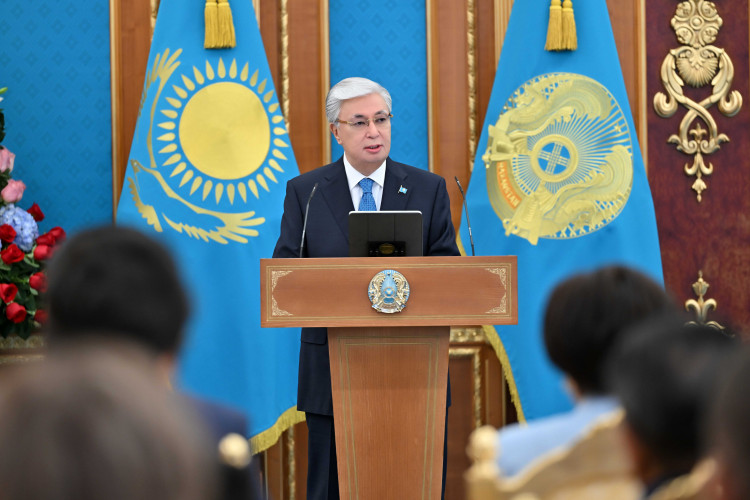
Over the years, the Center has become an essential destination for official visits and cultural missions. It is frequently visited by prominent politicians, distinguished public figures, foreign ambassadors, international guests, famous athletes, and honored figures in culture and the arts. Their visits underscore the Center's high status and significance.
Beyond its museum activities, the Center serves as a modern dialogue platform, bringing together people of different generations and perspectives.
Accessibility: Special attention is given to socially vulnerable categories of visitors. For these groups, guided tours and mass events are provided free of charge, ensuring equal access to the Center’s cultural and educational resources.
Systemic Education: Educational and enlightenment programs are developed in accordance with the state policy priorities of the Republic of Kazakhstan. These programs are systemic, flexible, and regularly updated to reflect strategic priorities and public demand.
Partnerships: The Center maintains close partnerships with public associations, veterans' organizations, intergenerational councils, educational institutions, sports structures, and regional enterprises. It takes an active part in the civic life of the city and region, making a significant contribution to the development of culture, art, and the preservation of our country's traditional values.